
Fixtures
Garbage Disposal Repair in Desert Hot Springs, CA: Humming, Jammed or Leaking Under the Sink
A disposal that hums, stays silent or drips under the sink usually has one clear cause. Call Desert Hot Springs CA Expert Plumbers and describe what you hear and see; below is how each problem is traced and what the repair involves.
Humming, silent or jammed: what the sound tells you
A garbage disposal fails in a few recognizable ways, and the sound it makes points to the cause. Start with the sound before you reach for a tool.
| What you hear | Likely cause | What to try |
|---|---|---|
| A hum, but the blades do not turn | A jam: something is wedged against the blades | Turn the switch off, then turn the blades by hand from below with the hex key slot |
| Nothing at all | A tripped reset button or breaker, or a dead switch | Press the red reset button on the underside, then check the breaker |
| A grinding or rattling sound | A foreign object, such as a utensil, in the chamber | Switch off power and retrieve it with tongs or pliers, never with your hand |
| Normal sound, but slow draining | A clog past the disposal | Check the drain line and the trap before replacing the unit |
Always switch the disposal off at the wall, and unplug it or turn off the breaker, before you reach in. A disposal that starts unexpectedly causes serious injuries.
Where the leak is coming from
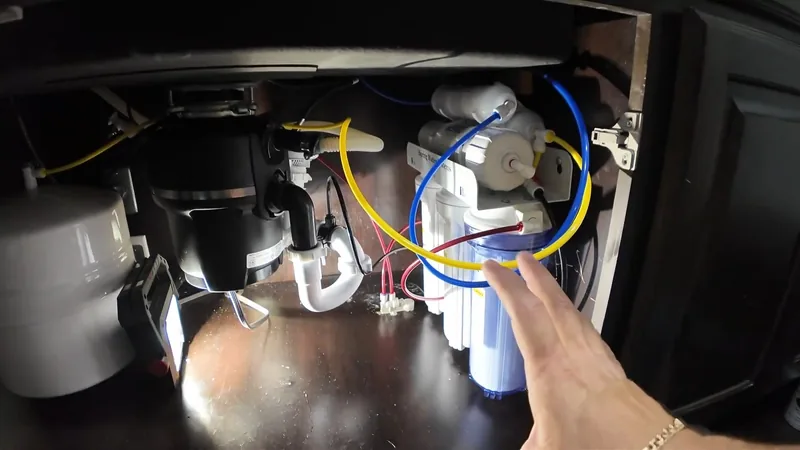
A leak under the sink is common, and the location tells you what failed. Dry the area, run water and the disposal, and watch where it appears first.
| Where water appears | What failed | Usual fix |
|---|---|---|
| At the top, where the sink meets the unit | The sink flange seal or mounting ring | Reseal or reset the flange |
| At the side, near the dishwasher hose | The dishwasher drain connection | Tighten or replace the hose and clamp |
| At the discharge pipe on the side | A loose or worn gasket on the drain elbow | Replace the gasket and tighten the bolts |
| From the bottom of the unit | A cracked housing or a failed internal seal | Replace the disposal |
A leak from the body of the unit usually means the disposal is finished. Ask the plumber to confirm the source before replacing it, since a loose connection is a much smaller job.
Repair or replace the unit
A jam or a tripped reset is a quick repair. A cracked body, a seized motor or a unit that has leaked from its seals more than once is usually worth replacing. Ask the plumber what they found and why they recommend one over the other.
- Repair makes sense for a jam, a loose connection or a worn gasket.
- Replace makes sense for a leak from the body, a burned-out motor or a unit well past a decade of use.
- Replacement is also the moment to look at the sink flange, the drain and the electrical connection.
- Ask for the repair price and the replacement price side by side.
Many disposals carry a manufacturer warranty. Keep the model and serial number from the label on the unit, and ask the plumber to note them on the invoice.
Disposal humming, jammed or leaking under the sink?
Tell us what you hear and where the water appears, and we will say what the visit should cover.
Choosing and installing a new disposal
A new disposal is a small plumbing and electrical job with a few choices that affect how long it lasts. A good install covers each one:
- Motor size: a larger motor handles tougher loads and runs quieter, and it costs more.
- The sink flange and mounting hardware, replaced or reset with new plumber's putty or a gasket.
- The dishwasher connection, with the knockout plug removed if a dishwasher will drain into the unit.
- The electrical connection, on a switch or a plug, to the manufacturer's instructions.
- A leak test with water running and the disposal on, before the cabinet is closed.
If the disposal is hardwired, ask whether the plumber handles the wiring or whether an electrician is needed. A plumber who says so plainly is saving you a second trip.
What not to put down a disposal
A disposal grinds soft food, and it does not cope with everything. Most repeat service calls come from the same few habits.
- Grease, fat and oil, which cool in the pipe past the unit and harden.
- Fibrous scraps such as celery, corn husks and artichoke leaves, which wrap around the blades.
- Starchy scraps such as potato peels and rice in quantity, which turn to paste.
- Coffee grounds in large amounts, which pack into the trap.
- Bones, fruit pits and anything that is not food.
Run cold water before, during and for a little after each use so that waste clears the trap. If a slow drain follows a heavy use, the clog is in the pipe past the unit, which is a clearing a clogged kitchen line job.
Smells and slow drains from the disposal
A bad smell from the sink usually comes from food residue stuck to the underside of the rubber splash guard or the walls of the chamber. Scrubbing the splash guard and grinding ice with a little citrus peel often helps. If the smell returns right away, a partial clog in the drain line may be holding waste.
If the kitchen sink drains slowly even with the disposal off, the clog is beyond the unit. If several fixtures are slow, the problem is not the disposal at all, and a blockage in the main line is more likely.
On septic? Ask before you add a disposal
Many parcels in Desert Hot Springs are on septic, not sewer. A disposal sends more solids and grease into a septic tank, which fills faster and may need pumping more often. If you are on septic, ask your septic service before adding or replacing a disposal.
This site does not cover septic service. If you are not sure whether your home is on sewer or septic, Mission Springs Water District at (760) 329-6448 can tell you.
Questions to ask before a disposal repair or install
A short list covers most of what matters:
- What failed, and is repair or replacement the better choice?
- What motor size and model do you recommend for my household, and why?
- Who handles the electrical connection?
- What is in the quote, and is the old unit removed?
- License details are available on request before work begins; can I have yours?
A disposal that leaks again within weeks of a repair is worth a callback. Ask what the plumber does in that case, before the work starts.
Garbage disposal questions, answered
Why is my garbage disposal humming but not grinding?
A hum without spinning blades usually means a jam. Switch the disposal off at the wall, turn the blades by hand using the hex key slot on the underside and then press the reset button. If it still will not spin, call a plumber.
Can a leaking garbage disposal be repaired?
It depends where it leaks. A loose drain connection or a worn gasket can be repaired. A leak from the body of the unit means the housing has failed, and replacement is usually the right step.
Disposal acting up in Desert Hot Springs? Call to book a visit
Tell us what you hear and where the water appears, and we will say what the repair should cover.