
Water heating
Tankless Water Heater Service in Desert Hot Springs, CA: Descaling, Error Codes and Installs
Error codes, lukewarm showers and a unit that has not been flushed since it was installed usually trace back to scale. Call Desert Hot Springs CA Expert Plumbers to talk through service, repair or a new install; below is what each one involves.
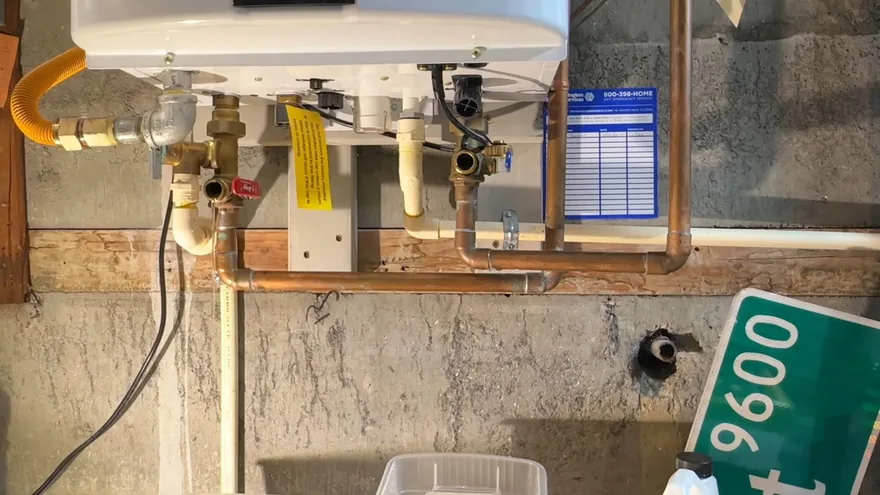
Is the unit failing, or just scaled?
A tankless heater warms water as it passes through a narrow heat exchanger. When scale narrows that passage, the unit overheats, shows an error code or delivers lukewarm water. Before you assume the unit is failing, note whether the problem came on slowly, which suggests scale, or suddenly, which suggests a part or the gas or power supply.
- Write down the error code on the display, if there is one.
- Check that the unit has power, and that the gas valve is open on a gas model.
- Note whether hot water is weak at one tap or at all of them.
- These checks cannot show scale inside the heat exchanger, which is the usual cause of slow decline.
Hard water at 79 to 340 mg/L: what it means for a tankless unit
Mission Springs Water District's 2025 report lists total hardness from 79 to 340 mg/L across its wells, which is roughly 5 to 20 grains per gallon by our conversion. Scale can build in a heat exchanger's tight passages faster than it does on the floor of a tank.
How often a unit needs descaling depends on your water and the model, so follow the manufacturer's interval and ask the plumber whether water at the harder end of that range calls for shorter spacing. This scale is ordinary hard water scale, not hot spring water, since the district says it does not draw from the hot water aquifer.
What a descaling visit involves
- The unit is isolated with service valves. If it has none, adding them is the first step.
- Descaling solution is circulated through the heat exchanger with a pump for the time the manufacturer specifies.
- The unit is flushed with clean water until the solution is gone.
- The inlet filter is cleaned, if the model has one.
- Output temperature and flow are tested, and the date and work are recorded.
Ask whether your unit has isolation valves. Units without them are harder to flush, and adding them is a common first step.
Plain flushing rinses sediment but does not dissolve scale, so ask whether the visit includes a real descaling and not only a rinse.
Error code, lukewarm water or a unit that was never flushed?
Tell us the make, the code on the display and how long it has been since the last service, and we will say what the visit should cover.
Tankless details to have ready: model, error code, fuel
The plumber will need a few facts before they can say what the visit involves. Have these ready:
- The make, model and serial number from the label on the unit.
- The error code, if one shows, and when it first appeared.
- Whether the unit runs on gas or electricity.
- The install date and the date of the last service, if you have them.
- What changed first: slow warm-up, lukewarm water, a noise or a shutdown.
If you bought the home with the unit already installed, ask the seller for any service records, or tell the plumber there are none. Either answer helps them judge how much scale to expect.
Check the warranty before the first flush
Some manufacturers tie warranty coverage to regular maintenance, and some to water quality. Read yours, keep a record of each service, and ask the plumber to note the date and the work done on the invoice.
If your unit is past its warranty, the record still helps. It shows you and any later owner what has been done and when.
Switching from a tank: what has to change
Moving from a tank to a tankless unit is a bigger change than swapping one tank for another. Ask the plumber to walk through each item:
| Item | Why it matters |
|---|---|
| Gas line capacity | Tankless units draw a lot of gas at once, and the existing line may be too small |
| Venting | The vent path and material depend on the model |
| Condensate drain | Condensing models need a drain for acidic condensate |
| Electrical supply | Electronics, fans and some electric models need power |
| Location and clearance | Wall space, service access and distance to fixtures |
| Hard water plan | Descaling schedule, isolation valves and whether a softener belongs in the plan |
If you are replacing a failed tank rather than switching, tank replacement covers the options for staying with a tank.
Undersink and point-of-use units for a far-away tap
A small point-of-use heater near one sink or bathroom gives hot water quickly where the main heater is far away. It suits a guest suite, a detached office or a kitchen at the far end of the house. It does not replace a whole-house heater.
Ask about the electrical circuit the unit needs and where it can be reached for service. A unit buried behind a cabinet panel becomes a problem on the day it fails.
When the unit needs repair, not a flush
An error code that returns after descaling, an igniter that will not light, or a fan or sensor fault needs diagnosis. Ask the plumber what the code means, whether the part is available and how long it takes to get. Tankless units are often sold with a longer service life than tank heaters, so a repair on a unit under 10 years old is usually worth pricing.
Ask for the repair price in writing, and for a replacement estimate next to it if the unit is older. License details are available on request before work begins.
Tankless water heater questions
Should I flush or descale my tankless water heater?
Descaling is the maintenance task. A plain flush rinses sediment but does not dissolve scale. With hardness at the level Mission Springs Water District reports, ask how often your unit needs descaling and follow the manufacturer's interval.
Can a tankless water heater run out of hot water?
It does not run out the way a tank does, but it can reach its flow limit. If two showers and the dishwasher run at once, the unit may deliver lukewarm water. Ask the plumber about the unit's rated flow and what you run at the same time.
Tankless unit acting up in Desert Hot Springs? Call for service
Give us the make, the error code and the last service date, and we will say what the visit should cover.