
Sewer and drains
Hydro Jetting in Desert Hot Springs, CA: When a Cable Only Gets You a Few Weeks
A drain that clears and then slows down again usually has buildup on the pipe wall that a cable cannot reach. Call Desert Hot Springs CA Expert Plumbers to talk through jetting; below is when it works and when a camera comes first.
What jetting does that a cable cannot
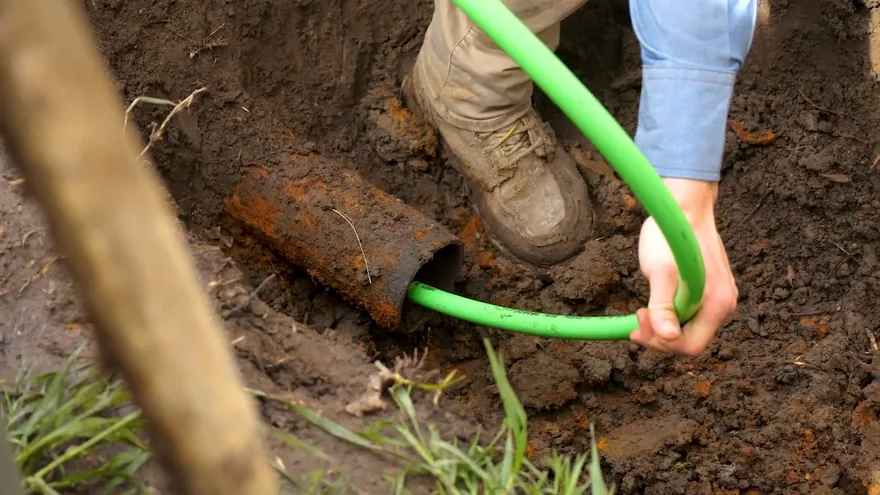
A drain cable cuts through a blockage and leaves a hole the size of the cutter. Grease, scale and sludge that line the pipe wall stay in place, and the drain slows down again. Hydro jetting sends water through a hose at high pressure and scours the whole inside of the pipe.
That difference is why a line that clears and clogs again within weeks is a candidate for jetting. It is also why jetting is the wrong tool for some pipes, which is covered below. The plumber should explain which one fits your line before choosing.
| Compare | Cable machine | Hydro jetting |
|---|---|---|
| How it works | A rotating cutter bores through the blockage | High-pressure water scours the pipe wall |
| Best at | A single clog, roots at one point | Grease, scale and sludge along the whole pipe |
| Leaves behind | Buildup on the pipe wall around the opening | A cleaner pipe along its length |
| Care needed | Usually little | A sound pipe, a camera check first and a clear access point |
Signs a line needs scouring, not another cable pass
The pattern of the problem tells you more than a single clog does. These are the usual signs that buildup, not a lone blockage, is the cause:
- The drain clears and slows down again within weeks or a few months.
- Several fixtures drain slowly at the same time, with gurgling from the lowest ones.
- A kitchen line with a greasy smell or a slow sink that a cable only partly fixes.
- A camera that shows a narrowed pipe coated with grease or scale.
- Roots cut in the past, with the line still slow after the cutting.
If you have only had one clog, a cable is usually enough and costs less. Ask the plumber to explain what they saw before recommending jetting.
Why a camera comes before the jet
High-pressure water is hard on a pipe that is cracked, offset or thinned by corrosion. Used on a weak line, it can widen a crack or push water and debris into the soil around the pipe. A camera pass shows whether the pipe can take it.
Ask for the footage before and after. The first pass shows the condition of the pipe and where the buildup sits. The second shows whether the jet cleared the wall. If the camera finds a break or a collapsed section, jetting stops and the conversation moves to how camera findings point to repair.
Ask what pressure and nozzle the plumber plans to use, and whether they adjust for the pipe material and age. A plumber who has checked the pipe can answer in a sentence.
Drain that keeps coming back after every cable visit?
Tell us how often it slows down and which fixtures are affected, and we will say whether jetting or a camera pass comes first.
Kitchen lines, restaurants and grease
Grease is the usual reason a kitchen line fills up. It cools in the pipe, hardens and narrows the passage a little more with each wash cycle. A restaurant, a school kitchen or a home with a heavy cooking schedule sees this faster than a bathroom line does.
For a commercial kitchen, ask whether a grease interceptor is on the line, who empties it and when it was last serviced. A written schedule for jetting, matched to how fast the line fills, costs less than an emergency visit on a busy night.
At home, the best defense is simple: wipe pans before washing, and keep cooking oil out of the sink. Jetting clears what has already built up. It does not stop it from building again.
Scale and mineral buildup in older lines
Mineral scale grows inside drain and waste pipes the same way it grows inside a water heater, only more slowly. Mission Springs Water District's 2025 report lists total hardness from 79 to 340 mg/L across its wells, and total dissolved solids from 190 to 690 mg/L. Those minerals leave deposits wherever water sits or evaporates.
Jetting can remove scale from the pipe wall. Cast iron and older steel lines tend to collect more of it, so ask the plumber what material your line is and what the camera showed. Do not assume the line is cast iron because the home is older, since the material depends on the house and not the year alone.
Access for jetting: cleanout, toilet flange or roof vent
A jetting hose needs a way into the line. A cleanout outside the house is the easiest. If there is none, the plumber may work through a toilet flange or a roof vent, which takes more time and care. Ask where the access will be before the visit.
If your home has no cleanout, installing one is worth considering. It makes every later camera pass and every later cleaning simpler, and the cost of one is small next to the cost of pulling a toilet each time.
How often jetting makes sense
There is no single schedule that suits every line. A bathroom line that has never clogged needs none. A kitchen line that serves heavy cooking may need cleaning once a year or more. The right interval comes from how fast your line fills, which the camera shows.
After a jetting visit, ask the plumber when to look again. If the line is slow again in a few months, the problem may be something jetting cannot fix, such as a belly in the pipe or a joint that lets roots in. See drain cleaning for single clogs if the problem is one fixture and not the main line.
Questions to ask before a jetting visit
Jetting is a specialist service, and a few questions separate a careful visit from a rushed one:
- Will you run a camera before jetting, and can I keep the recording?
- What pressure and nozzle will you use on my pipe?
- Where will the hose go in, and will you need to pull a fixture?
- What happens if the camera shows a break or a collapsed section?
- What will you do with the water and debris that come back out?
- License details are available on request before work begins; can I have yours?
Ask for a written note of what was found and what was done. If the line needs repeat visits, that note shows how fast it fills.
Hydro jetting questions, answered
Is hydro jetting safe for old pipes?
Not always. High pressure can damage a cracked or thin pipe, so a camera check should come first. If the pipe is sound, jetting is safe and effective. If it is not, a repair or a different cleaning method may be the better step.
How is hydro jetting different from snaking a drain?
A cable cuts a hole through a blockage. Jetting scours the whole pipe wall with water under pressure, which removes grease and scale a cable leaves behind. A single clog often needs only the cable. A line that keeps slowing down is the better case for jetting.
Drain keeps slowing down in Desert Hot Springs? Call about jetting
Tell us how often it slows and which fixtures are affected, and we will say whether jetting or a camera pass comes first.