
Leaks and breaks
Leak Detection in Desert Hot Springs, CA: Find the Source Before Anyone Opens a Wall
A bill that climbed, a floor that feels damp or a stain you cannot explain all point to water going somewhere. Call Desert Hot Springs CA Expert Plumbers and describe what you found; below is how a hidden leak is traced.
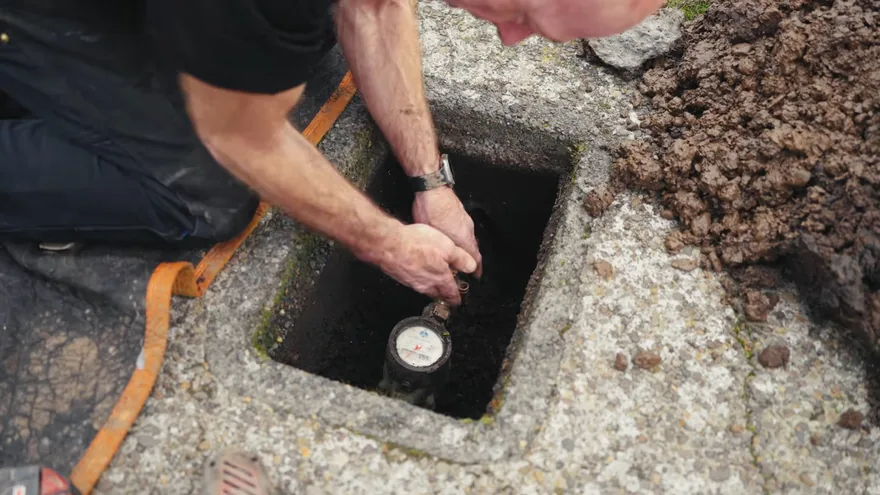
A high water bill and no wet spot: how to tell if it is a leak
A bill that jumps with no change in how you live is the most common reason people suspect a hidden leak. The first job is to separate a leak from ordinary use, and the water meter is the cleanest way to do it.
- Turn off every tap, the dishwasher, the washing machine and the ice maker, and make sure nobody flushes.
- Find your meter and look for a small dial or triangle that turns when water moves. Many meters have one.
- If it spins with everything off, water is going somewhere. Write down the reading, wait an hour without using water, and read it again.
- If the reading changed, close the main valve at the house and check again. A meter that stops means the leak is inside the house. A meter that keeps moving means it is on the line between the meter and the house.
Take that result to the plumber. It saves a lot of searching, because it says whether to look in the walls and floors or in the yard. If you cannot find the meter or read it, call Mission Springs Water District at (760) 329-6448 and ask where yours is and how to read it.
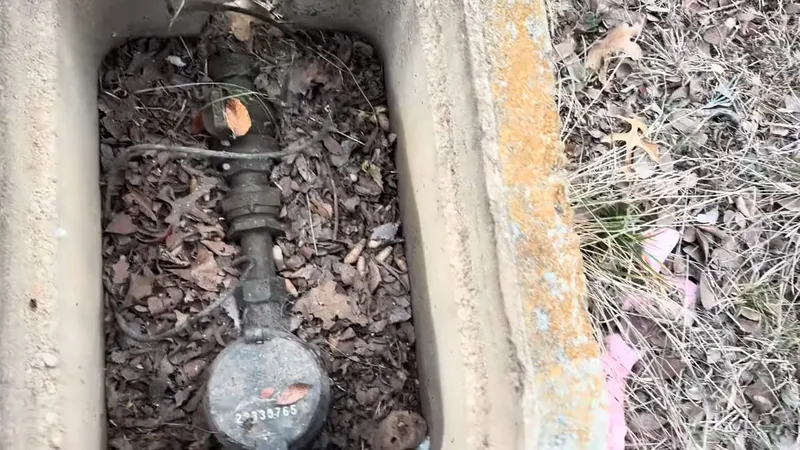
Hidden leak clues: musty smells and bubbling paint
Most hidden leaks announce themselves before they do damage, if you know what to look for. None of these proves a leak by itself, but two or three together deserve a visit.
- A musty smell in a closet, cabinet or room that has no other source.
- Paint that bubbles or peels, or a stain on a ceiling or the base of a wall.
- Flooring that cups, lifts or feels warm or damp in one spot.
- The sound of water running when nothing is on.
- Water pressure that has dropped at several fixtures at once.
- A hot water bill or gas bill that climbs while usage stays the same.
Photograph each sign with the date. If the leak turns out to have damaged a floor or wall, those photos help with an insurance claim, and they show the plumber how long the problem has been developing.
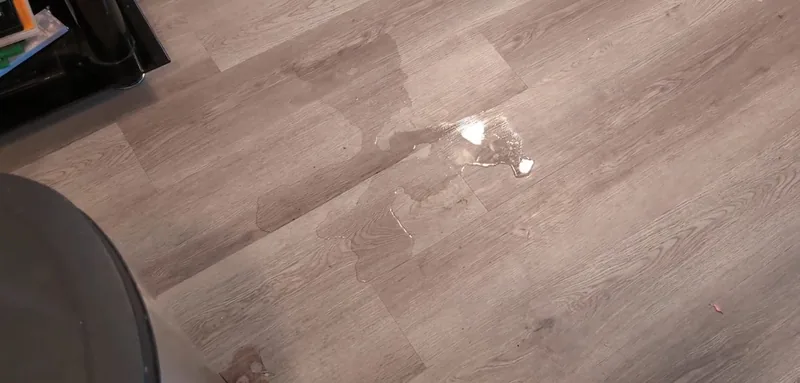
How a plumber finds a leak without opening the wall
Guessing means cutting holes, and a leak detection visit is meant to avoid that. The method depends on what is leaking and where, and a good plumber will tell you which one they plan to use and why.
| Method | What it does | Best suited to |
|---|---|---|
| Pressure test | Isolates a section of pipe and watches whether pressure holds | Deciding which line is leaking before any other step |
| Acoustic listening | Uses sensitive microphones to pick up the sound of escaping water | Pressurized lines under floors, in walls and in the yard |
| Thermal imaging | Shows temperature differences where water is moving through a surface | Hot water lines, ceilings and radiant or damp areas |
| Tracer gas | Fills a drained line with a safe gas and detects where it escapes | Lines where sound and heat do not give a clear answer |
| Camera inspection | Looks inside a drain or sewer line | Leaks in drain pipes, not pressurized water lines |
No single tool finds every leak. Ask what the plumber will do if the first method is inconclusive, so that you know whether a second visit is likely.
Meter moving, bill climbing or a stain you cannot explain?
Tell us what the meter did and where you saw the sign, and we will say what the visit should look for.
Ceiling, wall and behind-the-wall leaks
A stain on a ceiling is rarely directly below the leak, because water travels along framing and pipes before it shows. A plumber will usually start by asking what is above the stain: a bathroom, a water heater, an air handler or the roof.
A wall that stays damp near the floor often points to a supply line, a drain connection or a shower valve. If the damage appears only after rain, the roof or a window may be the cause and a plumber cannot fix it. Say that early, so that you call the right trade and do not pay for a search that cannot succeed.
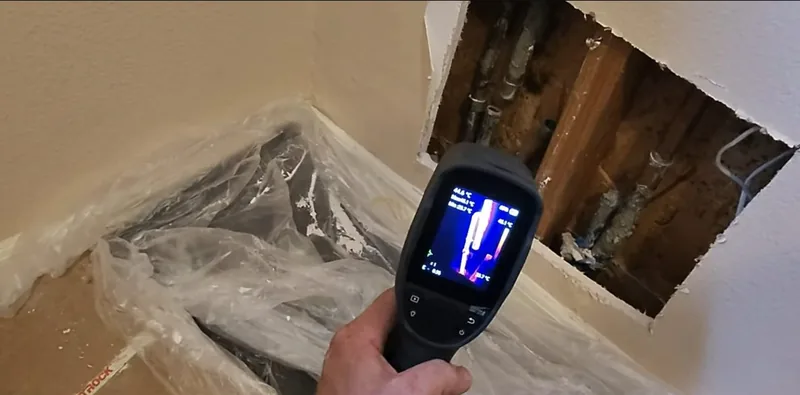
Copper pipe and pinhole leaks
A pinhole leak is a tiny hole, often in copper, that sprays a fine mist or seeps for months. It can soak insulation and drywall long before anyone sees it. If you find one, a patch may hold for a while, but a second pinhole in the same system usually means the pipe is wearing from the inside.
Ask the plumber whether the leak is a single failure or a sign of a wider problem. If you have had more than one, a whole-house repipe may be worth pricing next to another repair.
Yard, service line and irrigation leaks
The line between the meter and the house is yours to maintain. A leak there often shows as a wet patch that does not dry, a soft spot in the lawn or a meter that moves when the house is off. In dry weather, a green strip or a damp stripe on bare ground is worth a look.
Irrigation systems leak at valves, risers and buried joints, and the loss can be large without any sign at the surface. Turn the system off at the controller and check the meter again. If the meter stops, the sprinkler lines are the likely source.
Digging near buried lines carries its own risk. Before any excavation, call 811 at least two working days ahead so that buried utilities are marked. Your plumber should ask for that ticket number before the dig begins.
Pool, spa and other leaks the plumber may or may not handle
Pool and spa leaks often sit in plumbing the pool company knows best. Ask whether the plumber covers the equipment pad and the lines back to the house, and whether you should call a pool specialist for the shell and fittings. A plumber who says so plainly is saving you a wasted visit.
Roof and gutter leaks belong to a roofer. A leak below a basement, crawlspace or below-grade room may come from groundwater, not a pipe, so describe when it appears. Rain, irrigation and a plumbing failure each leave different clues, and the plumber needs to hear which one fits.
A shop, restaurant or office adds more lines, more fixtures and often a shared meter. Ask the plumber to test each section of the building separately, so that the search does not shut down the whole business at once.
What a gas smell means and what to do first
A gas odor is not something to investigate yourself. Leave the house, leave the door open if you can do so without delay, and do not touch light switches or start a car in the garage. From outside, call 911 or your gas utility.
Once the utility has made the area safe, a plumber can find and repair a leak in the house piping. For that work, see repairing a leak in gas piping.
What to ask before you book a leak detection visit
Leak detection can mean a quick meter check or a half day of testing. These questions make the difference clear before anyone arrives:
- Which methods will you use, and what will you do if the first one does not find it?
- Will you give me a written report showing where the leak is and how you know?
- If the leak is found, will you repair it on the same visit, or quote it separately?
- How do you handle access: will you cut anything before telling me the plan?
- License details are available on request before work begins; can I have yours?
A report with photos and a marked location is worth asking for. It is useful to an insurer, a landlord or a later buyer, and it shows the plumber found the leak and did not guess at it.
Leak detection questions, answered
How can I tell if I have a leak I cannot see?
Shut off everything that uses water and read the meter, wait an hour without using any water, and read it again. If the number changed, water is leaking somewhere. Closing the main valve at the house and watching the meter then tells you whether the leak is inside or on the line outside.
Will the plumber have to cut into my walls or floor?
Not always. Pressure testing, listening and thermal imaging usually narrow a leak to a small area first. If access is needed, the plumber should show you where, explain why and tell you how the opening will be repaired before cutting.
Suspect a hidden leak in Desert Hot Springs? Call to book a visit
Give us the meter reading, the sign you noticed and where it showed up, and we will say how the leak gets found.