
Water quality
Water Filtration Systems in Desert Hot Springs, CA: Match the Filter to the Problem
Taste, odor, grit or just wanting cleaner drinking water each calls for a different filter. Call Desert Hot Springs CA Expert Plumbers to talk through the options; below is how to match a system to the problem and what upkeep it needs.
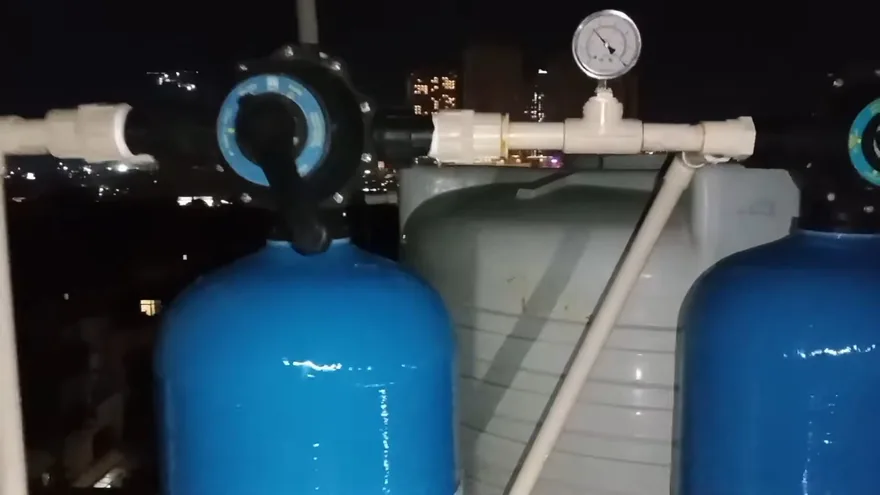
Start with the district water report, not a sales pitch
Water filtration is a broad term, and some sellers use fear to sell it. The better starting point is the water report your district already publishes. Mission Springs Water District's 2025 report lists what was found in its wells, along with the limits that apply.
The report shows total dissolved solids from 190 to 690 mg/L, against a secondary standard of 1,000 mg/L, and fluoride between 0.46 and 0.85 mg/L, against a limit of 2 mg/L. Arsenic was not detected in the 2024 sampling. Your tap may also vary by street, so a test at your own tap tells you more than a regional number does.
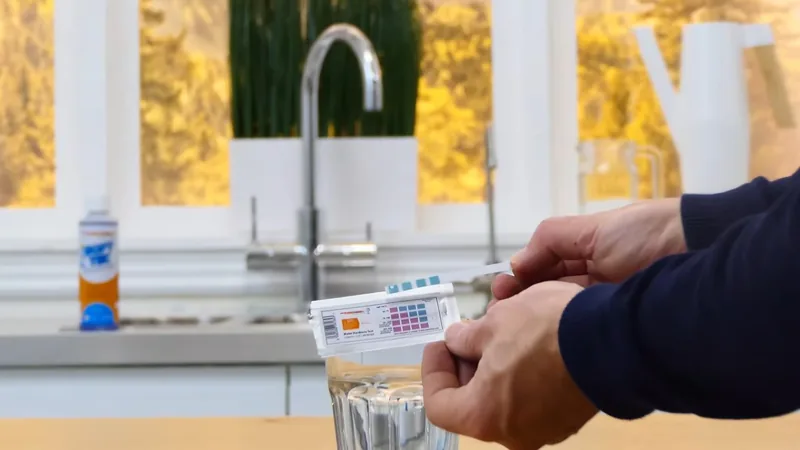
What you want the water to do
Sellers use water filtration and water purification loosely, so ask what a system is rated to remove and under which test standard. A filter should answer a specific complaint. Different filters fix different things, and none fixes everything. Decide what bothers you first, then match the filter to it.
| What you notice | What may address it |
|---|---|
| Taste or odor from chlorine | Activated carbon, at the sink or on the whole house |
| Sand, grit or cloudy water | A sediment filter at the main line |
| Scale on fixtures and appliances | A softener, not a filter. See the softener page |
| A specific substance in a lab test | A treatment chosen for that substance, confirmed by a test |
| Better drinking water at one tap | A point-of-use system under the kitchen sink |
If scale is your main complaint, a filter will not help. a water softener sized to your supply addresses hardness, which filters do not.
Whole-house or under the sink
A whole-house system treats the water as it enters the home, so every tap and appliance gets it. A point-of-use system treats one tap, usually the kitchen, and costs less to install and maintain. Which one fits depends on what you want to fix and where.
- Whole-house suits sediment, chlorine taste and odor across the house.
- Under-sink suits drinking and cooking water and takes less space.
- A reverse osmosis unit under the sink removes more dissolved material, and wastes some water doing it.
- Some homes use both: a sediment and carbon filter at the main, and a drinking tap at the kitchen.
Ask the plumber what each option removes, in plain words, and what it does not. A claim that a system removes everything is a reason to ask for the test data behind it.
Water that tastes or looks off, or just not sure what you need?
Tell us what you notice and at which taps, and we will say how to test it and what is worth pricing.
Filter maintenance is the real cost
A filter works until it clogs or its media is used up, and then it works badly or not at all. Cartridges need replacing on a schedule that depends on your water and how much you use. A system that is not maintained can be worse than none, because trapped material can build up inside.
Ask what the replacement parts cost and how often they are needed, and who in your area supplies them. Ask whether the plumber can set a reminder or leave a service date on the unit. A filter you forget about is not doing its job.
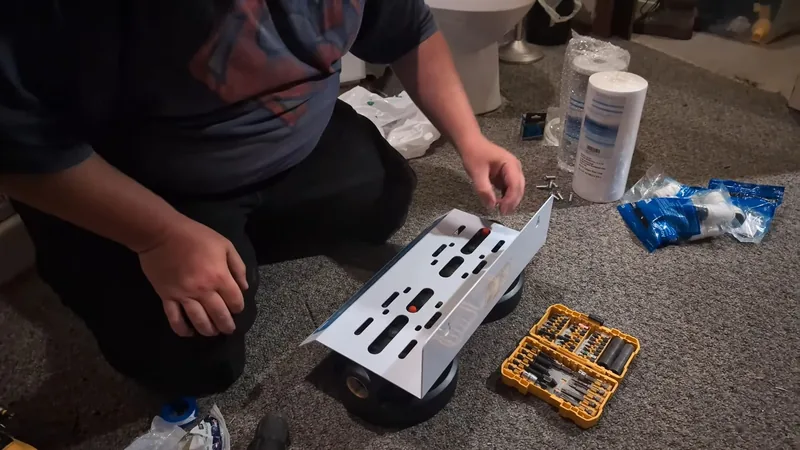
What a good install includes
A filter is a plumbing job as well as a product. It attaches to your main line or a sink line, and a poor install can leak or restrict flow. Whatever the system, a careful install includes a few things:
- Shutoff valves on both sides, so that the unit can be serviced without shutting the whole house down.
- A bypass, so that water can reach the house if the filter is out of service.
- Pressure and flow checked before and after, so that you know the filter is not choking the supply.
- A pressure gauge, where the system calls for one.
- A written note of the model, the cartridge numbers and the replacement dates.
For a unit that connects to a drain, ask where the waste water goes. Some systems send water to a drain on a schedule, and the drain needs to be able to take it.
Taste at the tap: what to try first
If your complaint is the taste, a simple pitcher or a faucet-mounted filter is a low-cost way to find out whether a carbon filter solves it. If it does, you have a reason to consider a better system. If it does not, you have saved yourself a larger purchase.
A plumber can also check for causes that no filter will fix, such as an old water heater that is giving the hot water a flavor, or a sink line that has been sitting. Those are plumbing problems, and a filter will not touch them.
Combining a filter with a softener
The two do different jobs, and some homes use both. A softener goes first on the main line to handle hardness. A sediment or carbon filter handles the rest. Installing them in the wrong order can shorten the life of either one.
Ask the plumber to draw the layout, and to say which unit is first and why. If there is room, ask about service access for both, so that neither one is blocked by the other.
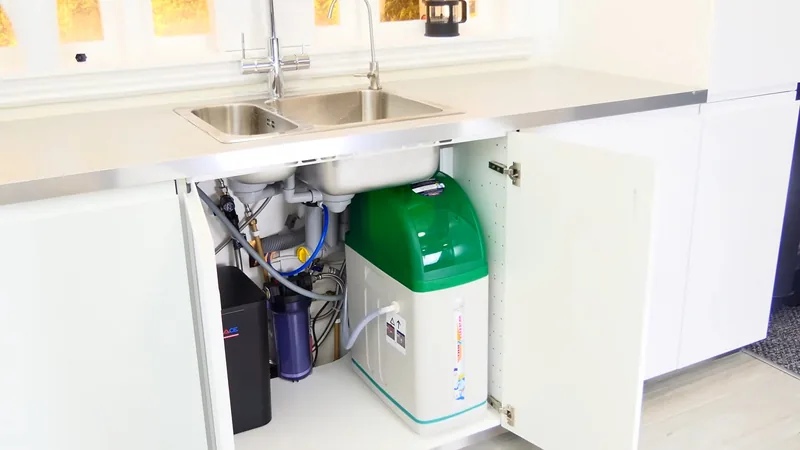
Questions to ask before you buy a filter
These questions work for any filtration quote:
- What problem will this solve, and how do you know I have it?
- What does it remove, and what does it leave in?
- What are the replacement parts, how often are they needed and what do they cost?
- Where will it be installed, and how is it serviced?
- What does the warranty cover?
- License details are available on request before work begins; can I have yours?
Do not sign for a system before you have seen a test of your own water. Ask for it in writing, along with what the system is expected to change.
Water filtration questions, answered
Is the tap water in Desert Hot Springs safe to drink?
Mission Springs Water District publishes an annual water quality report with its results and the limits that apply. Read it, and talk to the district at (760) 329-6448 with questions about your address. A filter is a choice for taste or preference unless a test shows a specific problem.
Do I need a filter or a softener?
It depends on what you want to fix. Scale on fixtures and appliances points to hardness, which a softener addresses. Taste, odor or sediment points to a filter. Some homes use both.
Want better water in Desert Hot Springs? Call to talk through filters
Tell us what you notice and at which taps, and we will say how to test it and what is worth pricing.