
Gas
Gas Line Repair in Desert Hot Springs, CA: Safety First, Then Finding and Fixing the Leak
If you smell gas, leave first and call 911 or your utility from outside. Once the area is safe, call Desert Hot Springs CA Expert Plumbers for the repair; below is how a gas leak is found, fixed and tested.
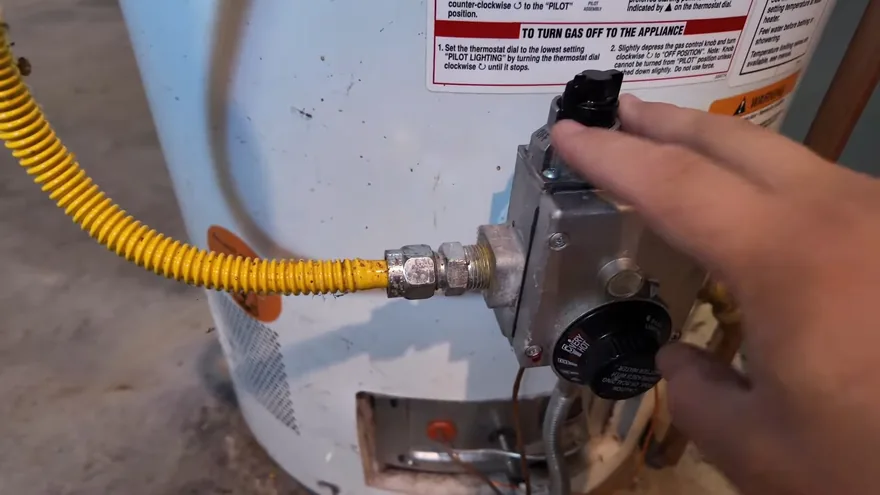
If you smell gas: leave first, call second
A gas odor, a hissing sound near a gas line or an appliance that smells wrong is a safety matter before it is a plumbing matter. Do not look for the leak, and do not wait to see whether the smell fades.
- Leave the house right away, with everyone and every pet, and leave the door open if it costs no time.
- Do not switch lights on or off, use a lighter, start a car in the garage or use a phone inside.
- From outside, at a distance, call 911 or your gas utility.
- Stay out until the utility or the fire department says it is safe.
- Call a plumber for the repair only after the area has been made safe.
The sections below cover what happens after that: how a leak is found, what a repair involves and what to ask. None of it is a reason to stay inside while you read.
Signs of a gas leak that are easy to miss
The smell of rotten eggs is the best-known sign, since utilities add an odor to gas so that people notice a leak. A small leak can be faint, though, and some people cannot smell it at all.
- A rotten egg or sulfur odor near a meter, an appliance or a line.
- A hissing or whistling sound near a gas pipe or fitting.
- A pilot light that keeps going out, or a flame that burns yellow or orange instead of blue.
- Dead or discolored plants in a line over a buried gas pipe.
- Physical symptoms such as headaches or dizziness that ease when you leave the house.
A detector can add a layer of warning. Ask the plumber where one belongs in your home, since natural gas and propane behave differently and the placement differs.
How a plumber finds and fixes a gas leak
After the utility has made the site safe, a plumber works through the gas piping in a set order. The goal is to find the leak, repair it and prove the repair holds before anything is turned back on.
| Step | What it involves |
|---|---|
| Shut off and isolate | The gas is shut off at the meter or the appliance, and the affected section is isolated |
| Locate the leak | Fittings and joints are tested with a leak detection solution or an electronic detector |
| Repair or replace the section | The leaking fitting or pipe is replaced with approved material |
| Pressure test | The repaired line is tested with a gauge to confirm that it holds |
| Restore service | Appliances are relit and checked, and the utility is involved where it requires it |
Ask to see the pressure test and the readings. A repair that is not tested is not finished.
Gas smell cleared and a line that still needs repair?
Once the utility has made the area safe, tell us which appliance or line is involved, and we will say what the visit should cover.
Appliance connections, flex lines and shutoff valves
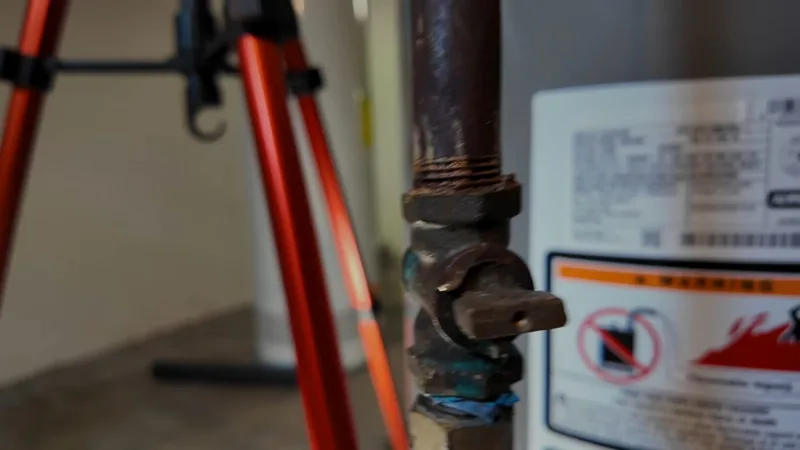
Many gas leaks are at the point where an appliance connects, not in the wall. A water heater, a range, a dryer and a furnace each connect through a flexible line and a shutoff valve. Those parts wear, get bumped during moves and are easy to overlook.
- Every gas appliance should have its own shutoff valve within reach.
- Flexible connectors should be in good condition, correctly sized and not kinked.
- Connectors should not be reused when an appliance is replaced.
- A new appliance may need a different connector or a different valve.
A plumber replacing a water heater should check these as part of the job. See tank replacement and its gas connections for what a proper swap includes.
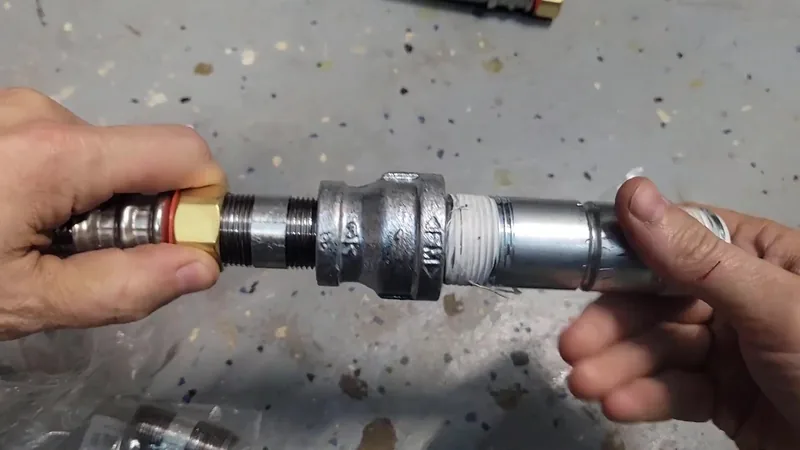
New gas lines for a range, dryer, grill or fire pit
Adding a gas line is a common upgrade, and outdoor kitchens and fire features are popular in desert yards. The line has to be sized for everything it will feed, and a poor estimate can leave the farthest appliance short of gas.
- List every appliance on the line, with its rating if you know it.
- Ask how the pipe size was chosen and whether the existing line can take the load.
- Ask where the line will run and whether it needs to be buried.
A tankless water heater draws a lot of gas at once, which makes line capacity a real question. See a tankless upgrade and gas line capacity for how that is checked.
Buried lines, 811 and who owns what
A buried gas line in a yard needs care. Before any digging, call 811 at least two working days ahead so that buried utilities are marked. A contractor should have the ticket number before work starts.
The utility's responsibility generally ends at the meter, and the piping from there to your appliances is on the owner's side. Confirm with your utility where its responsibility ends at your address, and ask the plumber before they start.
The permit office and the earthquake question
Building permits in Desert Hot Springs are issued by the City's Building and Safety Division, (760) 329-6411.
Desert Hot Springs sits on strands of the San Andreas fault zone, according to the U.S. Geological Survey. That makes it worth knowing where your gas shutoff is and how to close it. Ask your plumber whether a seismic shutoff valve makes sense for your home.
Checking a plumber before gas work
Gas work is not a place for guesswork. In California, a plumbing contractor license in the C-36 classification covers gas piping, appliance connections and the related valves. Check any plumber's license number on the Contractors State License Board's online lookup before the work begins.
State law requires a license for any job that needs a permit or workers, regardless of price. A contractor who offers to skip the permit is a reason to call someone else.
Questions to ask before gas line work
A short list tells you whether the plumber has planned the job:
- What will you test, and can I see the pressure test results?
- Will the line be sized for all of my appliances?
- What happens with the utility, and when is service restored?
- License details are available on request before work begins; can I have yours?
Ask for a written note of what was repaired and tested. It is useful to the utility, an inspector and a later owner.
Gas line repair questions, answered
What should I do if I smell gas?
Leave the house right away with everyone and every pet. Do not use switches, lighters or a phone inside. From outside, call 911 or your gas utility, and stay out until you are told it is safe.
Who repairs a gas leak: the utility or a plumber?
The utility makes the site safe and generally handles gas up to the meter. A plumber repairs piping and connections on the owner's side. Confirm with the utility where its responsibility ends at your address.
Gas line needs repair in Desert Hot Springs? Call once it is safe
If you smelled gas, leave and call 911 or your utility first. Then tell us which appliance or line is involved, and we will say what the visit should cover.